Rare Disease Day 2026
Rare Disease Day
28 February 2026
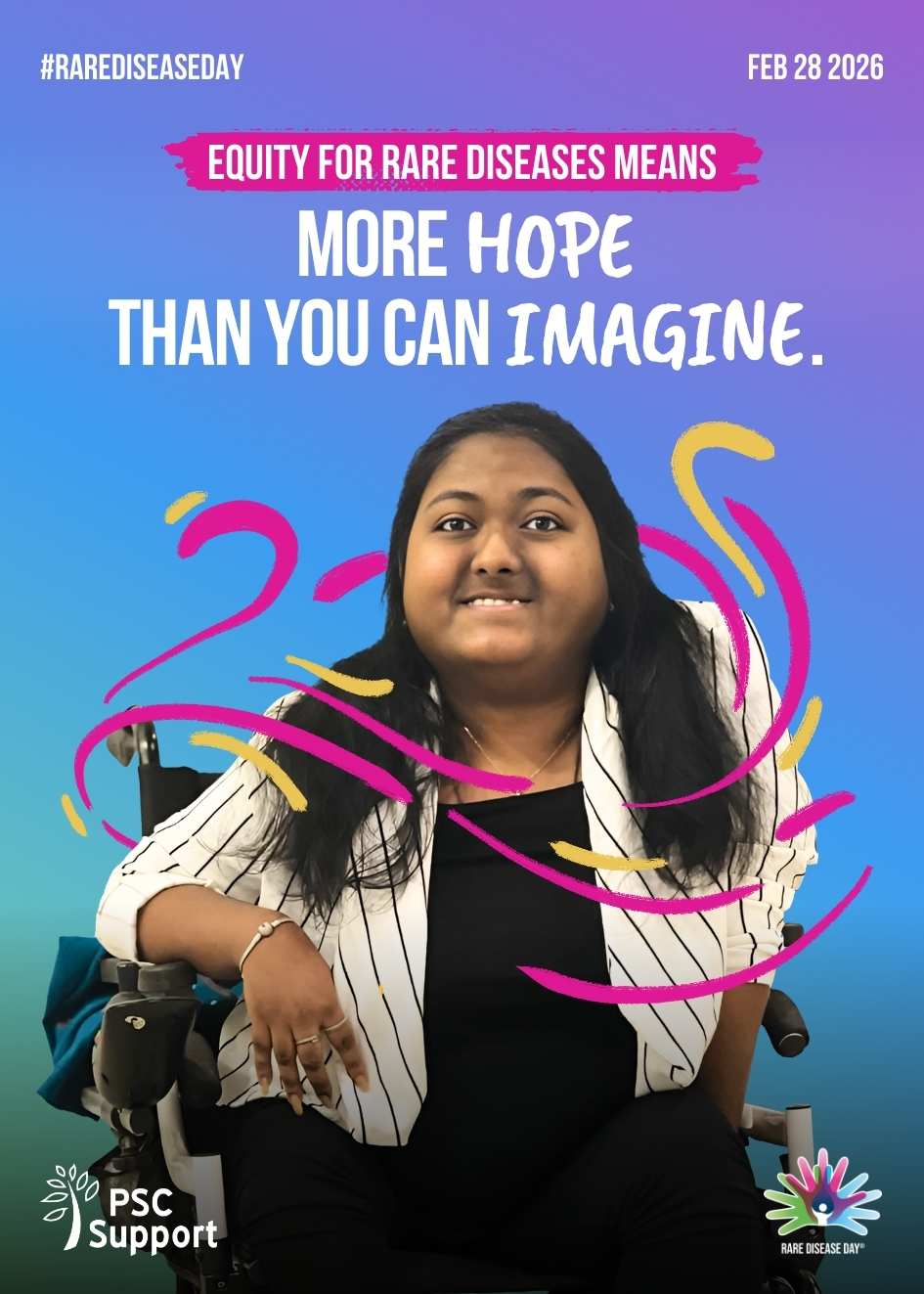
More HOPE than you can imagine
As Rare Disease Day approaches on 28 February, we pause to recognise the millions of people worldwide living with a rare condition. While any single rare disease affects a small number of people, collectively they are anything but rare. Over 300 million people globally live with one of the 6,000 identified rare diseases.
There are around 5,000 to 10,000 people with primary sclerosing cholangitis (PSC), in the UK, depending on how you count us.
The ‘diagnostic odyssey’ in rare diseases often leaves patients without answers for too long. For those with PSC, this journey is beset by delays and a lack of approved therapies.
The pace of progress is currently hampered by research barriers: the difficulty of recruiting from a small, rare patient population, the lack of a single diagnostic blood test, and the absence of 'surrogate biomarkers', reliable ways to measure if a drug is working without waiting decades for results. Furthermore, the disconnect between routine test results and how patients actually feel means that the true burden of symptoms like fatigue and itch is often overlooked in clinical trials.
To mark Rare Disease Day, PSC Support sat down with Steve Rossi, Chief Scientific Officer for PSC Partners Seeking a Cure, and Claudia Filozof, Vice President of Fortrea Development Ltd for a fireside chat. Our conversation centred on the power of collaboration in breaking these barriers and accelerating research to develop treatments.
How does patient advocacy influence PSC research?
Patient advocacy ensures the patient voice is not just heard, but is driving the research agenda. At PSC Support, we move beyond being trial subjects to becoming active partners in drug development.
We influence research in many ways, including though:
- Early Engagement: We advocate for pharmaceutical companies to engage with patient groups at the very beginning of clinical trial design, rather than after the protocol is signed.
- Reducing Patient Burden: We provide feedback on trial feasibility to help remove hurdles like excessive biopsies or rigid visit windows that can make participation nearly impossible for people with full-time jobs and families.
- Setting Relevant Endpoints: Through our Patient Panels, we help researchers identify the endpoints that actually matter to us, such as improvements in debilitating symptoms like itch and fatigue.
- Promoting Trials: We maintain interactive trial maps and information to ensure that the 75% of patients who are never even approached about a trial finally have access to these opportunities.
Why is equity of care essential for the rare community?
Access to specialist expertise remains a challenge, as PSC is a complex, immune-mediated disease that often co-exists with inflammatory bowel disease (IBD). Everyone deserves a clear care plan, regardless of where they live. We are working with clinicians to develop a 'PSC Care Bundle' (a standardised checklist) and develop a PSC care pathway ‘blueprint’ to ensure consistent management, monitoring for complications and cancer risk.
What are the latest treatments in development for PSC?
Despite the challenges, we are at a turning point. For decades, a treatment was a distant hope and a cure, out of the question. Today, however, we are entering a new generation of therapies for PSC.
There are now promising studies expected for drugs like nebokitug and elafibranor, and we’ve seen the early positive phase 3 results for others like NCA.
The fact that pharmaceutical companies are investing heavily in PSC research is a testament to the power of our patient advocacy (and very smart scientists and clinicians).
The Power of Collaboration
As Steve Rossi noted during our chat, the most important thing is the power of collaboration. When organisations like PSC Support and PSC Partners come together, we turn a rare, isolated voice into a global movement for change.
This Rare Disease Day, we look forward not with despair, but with the genuine hope that the treatments we needed ‘yesterday’ are finally on the horizon.
How can you help us reach Mission 2030?
PSC Support is committed to establishing a pathway towards finding a cure or effective treatment for everyone with PSC by 2030. Mission 2030 is powered by you, our community.
Every action, from joining a clinical trial, completing one of our surveys, to fundraising for vital research, brings us closer to a breakthrough.
Turning Ambition into Action in 2026:
Our Fortnight in Focus
At PSC Support, we want a world without PSC. We work tirelessly behind the scenes to drive research and improve lives. Here is a snapshot of what we've been up to:
Building Partnerships: We planned our attendance at major liver and gastro events this year to ensure healthcare professionals know about PSC and the guidelines around it.
Empowering our Community: We published our monthly research roundup to keep the community informed about research progress and advocacy news.
Improving Care: We collaborated with partners to develop a standardised care pathway, aiming for consistent care for everyone with PSC.
Organisational Excellence: We discussed how to show our appreciation to our donors in a more personal way.
Organisational Excellence: We provided research impact data to the Association of Medical Research Charities to maintain our high standards of transparency in research.
Organisational Excellence: We strengthened our data management systems to better track the impact of the research projects we fund.
Organisational Excellence: We signed off our budget for 26/27 to ensure we have proper and critical oversight of our spending.
Progressing Research: We updated the Asp-PSC clinical trial sites to ensure PSC patients are up to date on where they can go to take part in the trial and we held a webinar all about it!