Dr Nicholas Ilott
Impaired oxidative stress responses in the intestine in PSC-UC


Awarded to Dr Nicholas Ilott, University of Oxford
The total grant awarded is £15,000
Duration of award: 18 months (Jan 2024 to Jun 2026)
Research title: Impaired oxidative stress responses in the intestine in PSC-UC
Summary
PSC Support has awarded £15,000 to Dr Nicholas Ilott to uncover markers of ‘stress’ in cells in the small (intestine) in people with primary sclerosing cholangitis (PSC) and ulcerative colitis (UC). He will do this by using “proteomics” – a way of studying all the proteins in a tissue sample. This will be the first study to assess protein levels in the small intestine in people with both PSC and UC.
Identifying protein changes in PSC-UC could reveal new insights into how the liver and the intestine interact with each other and affect cancer risk in PSC. Dr Ilott also aims to understand the role of gut microbes in this process and how they might be modified to produce new treatments for PSC.
What will Dr Ilott do?
Dr Ilott will take intestinal biopsies from 15 people who have PSC with ulcerative colitis (PSC-UC), 15 people with ulcerative colitis alone (UC) and 15 healthy individuals. He’ll perform proteomic analysis (analysis of all proteins in the tissue samples) to identify proteins that are increased and decreased specifically in PSC-UC with a particular focus on caretaker proteins.
Why is this study important?
This is a new area of PSC research and will be the first study to assess protein levels in the small intestine in people with PSC-UC, people with UC and healthy individuals.
This research could reveal new insights into how the liver and the intestine interact with each other in PSC. This could lead to the development of new ways to stop cell damage in this disease. For example, this research might show that it is possible to control the amount of damage to the intestine by changing the types of bacteria that are present. This could be achieved by changing people’s diet to promote good bacteria that prevent cells becoming damaged.
Final Study Report
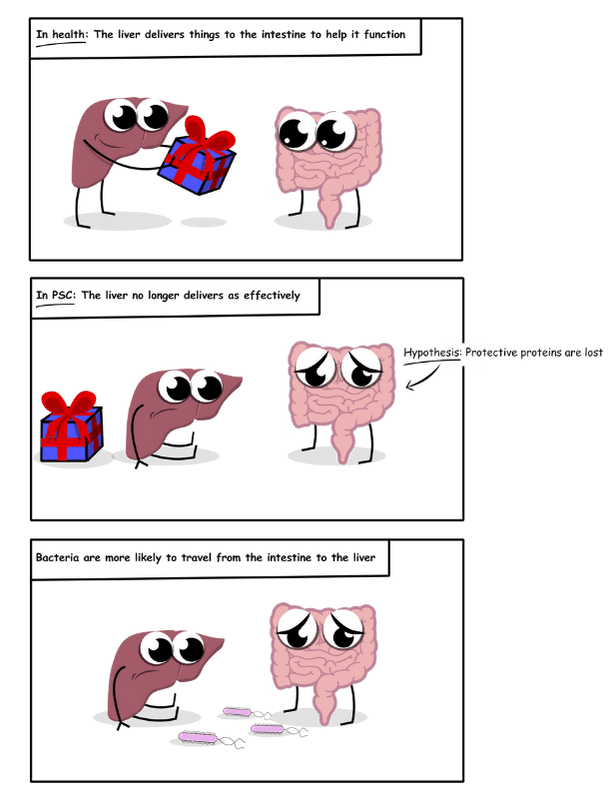
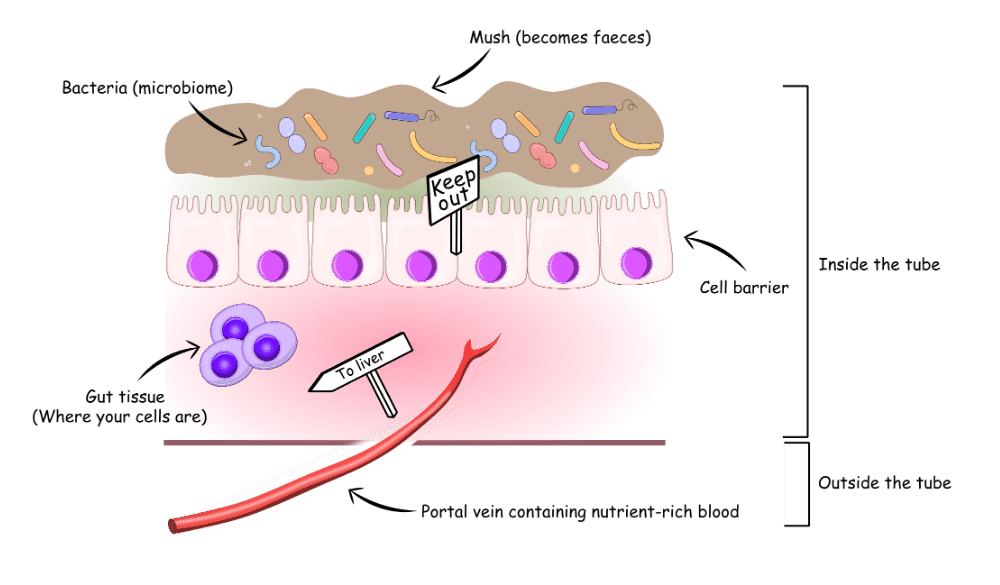
The digestive system is extremely complicated and involves many different organs. The organs that we are interested in in PSC research are mainly the liver and the intestine – this is because both of these organs are affected in the disease. During normal digestion, the liver produces some very important molecules that include bile acids – metabolites that are able to help to digest fats from the diet but also help the intestine. They help the intestine by keeping the intestinal barrier intact, this prevents the many bacteria (the gut microbiome) that live in the intestine from crossing into places they shouldn’t be.
Something that hasn’t been looked at before in PSC research is the small intestine. This is mainly because there aren’t obvious problems in the small intestine in PSC, where there are in the large intestine (e.g. inflammatory bowel disease). But, we thought that a reduced flow of bile acids into the small intestine from the liver to the small intestine in PSC might affect the function of the small intestine even if there aren’t symptoms there.
Over the last few years we have been exploring this.
Using advanced scientific methods to look at how cells behave in the small intestine in PSC (single cell RNA-sequencing) we were able to show that cells that form the small intestinal barrier in patients with PSC express lower levels of genes that are important for protection (this is to do with how they detox the cells).
Using funding from PSC Support, we were able to confirm that genes and proteins that are the “caretakers” of the cell are decreased in patients with PSC that have particularly high levels of the liver enzyme, alkaline phosphatase (ALP). This made us think that proteins in the gut that usually protect cells are decreased when the liver isn’t working properly. We were able to show that this is the case. Using models of PSC, we were able to show that these protective genes are decreased when the liver isn’t functioning as it should and this is probably because of bile acids.
“There is more work that we need to do to see if these proteins and genes are important in the progression of PSC or if they might be new targets for medicines. But our initial insights that have been aided by funding from PSC Support suggest that we may be able to target the small intestine – perhaps by changing the gut microbiome – to stop PSC from progressing.“
Dr Nicholas Ilott, November 2025
The details
Thank you to Dr Ilott for providing this excellent explanation:
Mission 2030 is an ambitious challenge and we can’t do it alone. We need your help to find the breakthrough people with PSC so desperately need.
It’s time we found effective treatments for PSC
Play your part in leaving no stone unturned
Make a donation to research and all the other things we do to help people affected by PSC