Groundbreaking PSC Genetics Research – Dr James Sun
From Seed Funding to Fellowship:
Dr James Sun’s Groundbreaking PSC Genetics Research
Update
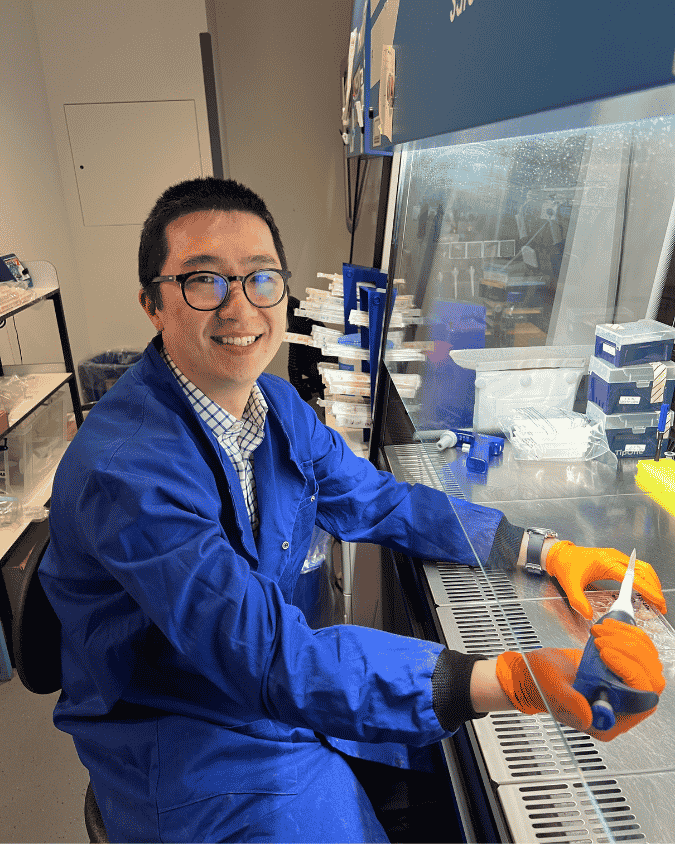
We are delighted to share how small grants create big waves in medical research. Dr James Sun has successfully used preliminary data from a seed funding study funded by PSC Support to secure a prestigious Clinical Research Training Fellowship from the Medical Research Council (MRC). This fellowship will enable him to pursue an in-depth PhD project focused on identifying the genetic drivers behind primary sclerosing cholangitis.
Frequently Asked Questions About PSC Genetics Research
What causes primary sclerosing cholangitis (PSC)?
PSC is a complex liver disease with an exact cause that is not yet fully understood. Current evidence suggests it develops due to a combination of multiple genetic changes in our DNA and unknown environmental triggers that cause an immune-mediated attack on the bile ducts.
How will this new research study genetic changes in PSC?
Dr James Sun's PhD project will use laser capture microdissection to isolate bile ducts from biopsies of people with PSC undergoing transplantation and from samples taken during procedures. By profiling the landscape of genetic changes, the study aims to pinpoint what causes these gene variations and model them in 3D bile duct organoids.
Why is studying genetic drivers important for patients?
Unlocking the genetic elements of PSC is vital because understanding how the disease develops helps scientists design strategies to interrupt it. This foundational knowledge is essential for identifying potential new treatments and exploring options like drug repurposing to improve patient outcomes.
"This will allow me to delve deeply into my project, develop technical research skills and my scientific approach to clinical problems... I hope to be able to improve our understanding of PSC to enable us to identify potential new treatments."
Dr James Sun, June 2026
Turning Ambition into Action in 2026:
Our Fortnight in Focus
At PSC Support, we want a world without PSC. We work tirelessly behind the scenes to drive research and improve lives. Here is a snapshot of what we've been up to:
Improving Care: We attended a major national clinical conference to equip general gastroenterologists and nurses with specialist knowledge, which helps ensure future work is better aligned with what people with PSC need by improving local care and pathways.
Progressing Research: Our 2024 investment into early-stage research to build necessary scientific evidence enabled Dr James Sun to secure major national funding to explore the genetic drivers of the disease. This foundational knowledge is essential for identifying potential new treatments.
Progressing Research: We supported the development of a research manuscript on nutrition in PSC, so that the findings can be effectively shared with the wider medical community. This will help us advocate for the needs of people with PSC to ensure they get the care they need at the right time.
Improving Care: We hosted a clinical consensus meeting to map out an ideal PSC care pathway, which helps ensure future PSC management is better aligned with what people with PSC need. Establishing standard protocols across the NHS is essential for eliminating regional variations in care.
Progressing Research: We contributed to the strategic planning of an international rare liver disease network, which supports progress towards better care for people with PSC. Broadening our influence ensures patient needs are integrated into wider clinical strategies.
Improving Care: We shared firsthand experiences of living with PSC at an international medical school event, which improves clinical understanding of the disease for healthcare professionals. This is important because ensuring future specialists understand the human impact of PSC helps drive patient-centered care and clinical excellence.
Progressing Research: After just over 48 hours on our Big Give Small Charity Week match funding initiative, your donations helped us get to 78% of the way to our £20,000 goal! Thank you! Can we reach 100%?