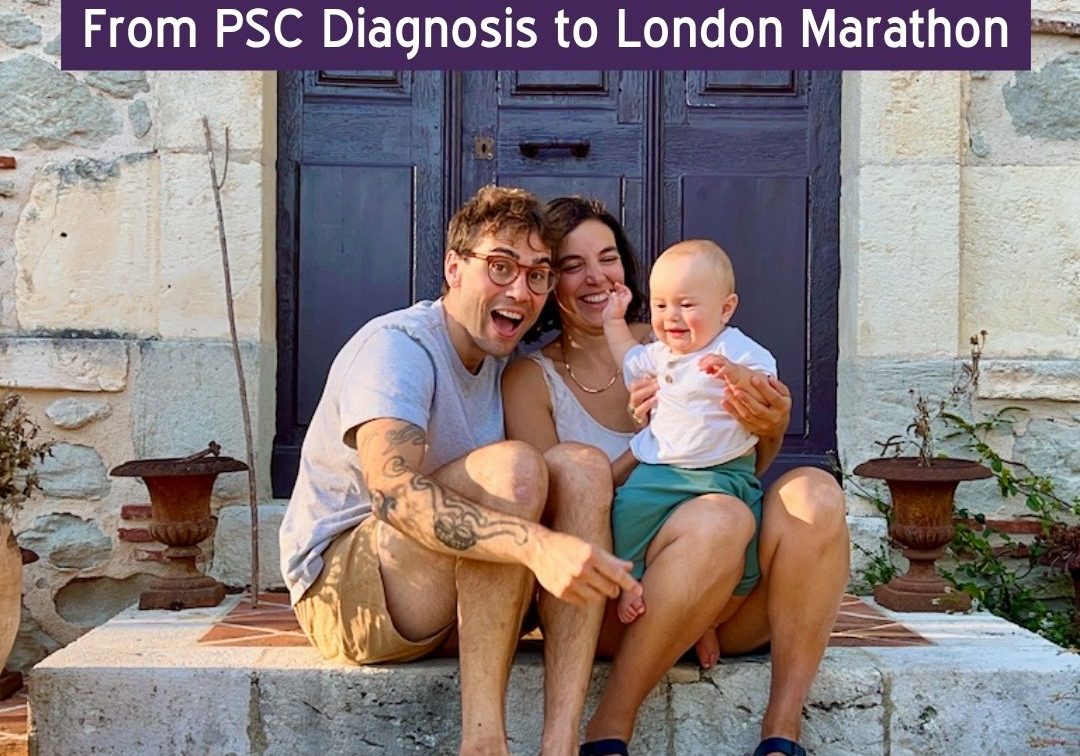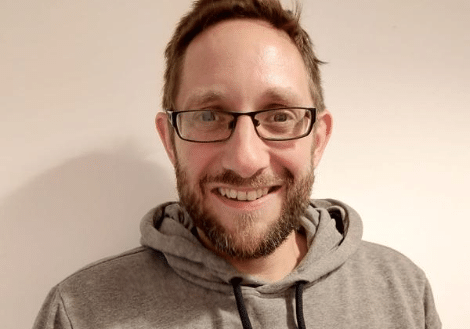
Antonio's Story: from PSC & UC diagnosis, to the London Marathon starting line
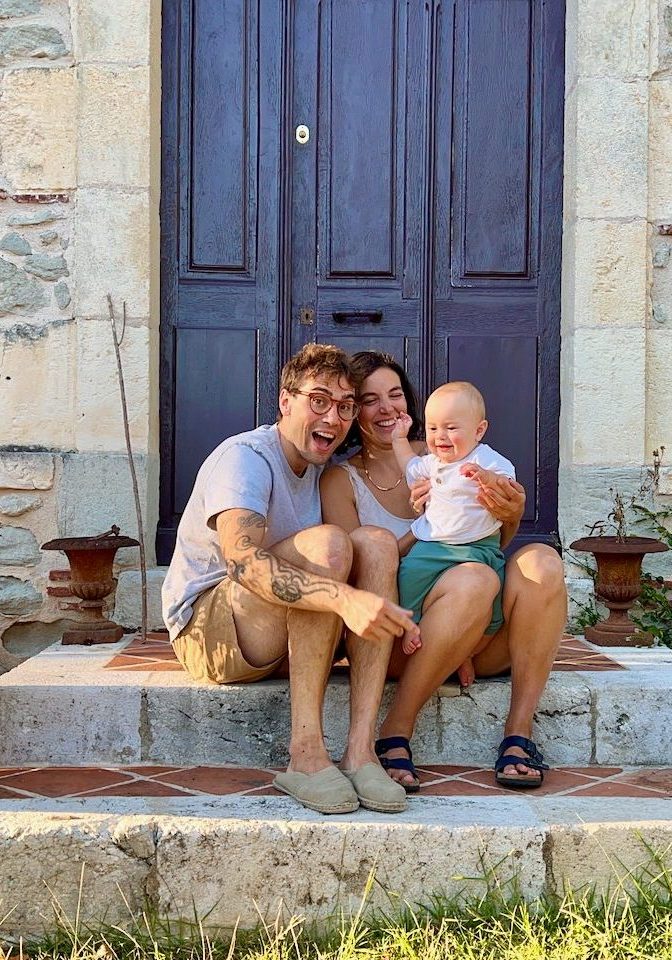
Antonio was diagnosed with PSC and UC in February 2023. His son was just about to turn one, and he had just turned 36.
Three years later, Antonio has raised over £10k for PSC Support, and he is kindly sharing his story as he prepares for the London Marathon 2026 with the ambitious goal of doubling that total.
The Journey to Diagnosis

The journey to diagnosis was long, mostly inconclusive and eventually scary. Irregularities in my liver function tests first appeared in 2016 after a routine check-up. I had no reason to believe anything was wrong. In fact, I felt healthier than I had at any point in my adult life.
A series of investigations followed that test result, but they all seemed clear. Three years later, in 2019, a liver specialist told me that “there’s a chance something will come up when you’re 60, but for now your liver is probably better than mine."
I paused the investigations and gradually moved my care from private to public services. One month after my son’s birth in March 2022 I attended a new referral appointment, and investigations resumed.
That November, the new consultant at Guy’s Hospital in London made me aware of the PSC hypothesis. He asked a few questions about my bowel movements and told me that, if confirmed, this “wouldn’t be a nice thing to have.” I felt deeply scared and froze, grasping for hope that this was not the case.
Normalising the Pain
It is strange how easily we can normalise pain and discomfort. That was the case for me, especially with UC. I have been in histological remission for a couple of years now, and because of this I can see how the condition had slowly worsened my life experience back then.
I had normalised living in discomfort, completely unaware that my bowel capabilities were severely compromised and that I was developing a set of deficiencies.
While the treatment I was given for UC had a potent and positive effect and enabled remission, dealing with PSC was a different story. The pain here is psychological, not physical.
Receiving the PSC diagnosis felt like being dealt a very rough hand. No matter the game I play, at times it can feel like the outcome is already written.
The Mental Toll
I sought therapy immediately, and I feel grateful for my employer’s health insurance, which enabled me to receive counselling for nearly two years.
I wondered many times how this diagnosis changed me. About the impact it has had on my family life, on my parenting, but also on other parts of me, like being my own parents’ child.
And the answer is clear. The impact was huge. Painful, but oddly enough, enriching.
The conversation around chronic or terminal illness often gravitates around uncertainty and how hard it is to cope with it.
Yet I often felt the hardest part of PSC was not uncertainty, but the narrowing of it. The awareness that, most likely, something fairly predictable is going to happen, and how that can blunt the sheer joy of the lived experience.

A Shift in Perspective
It is hard to say this, but PSC has somewhat enriched me. I do not say this lightly, nor from a religious standpoint. And by all means, I would rather not have PSC or UC at all.
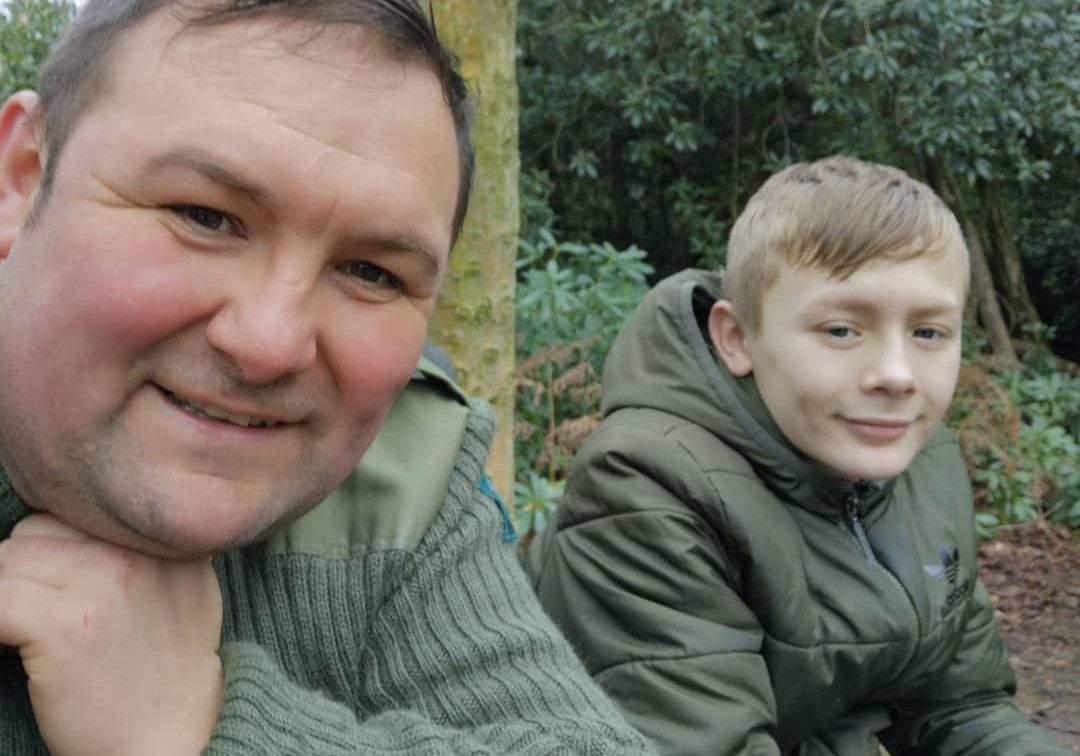
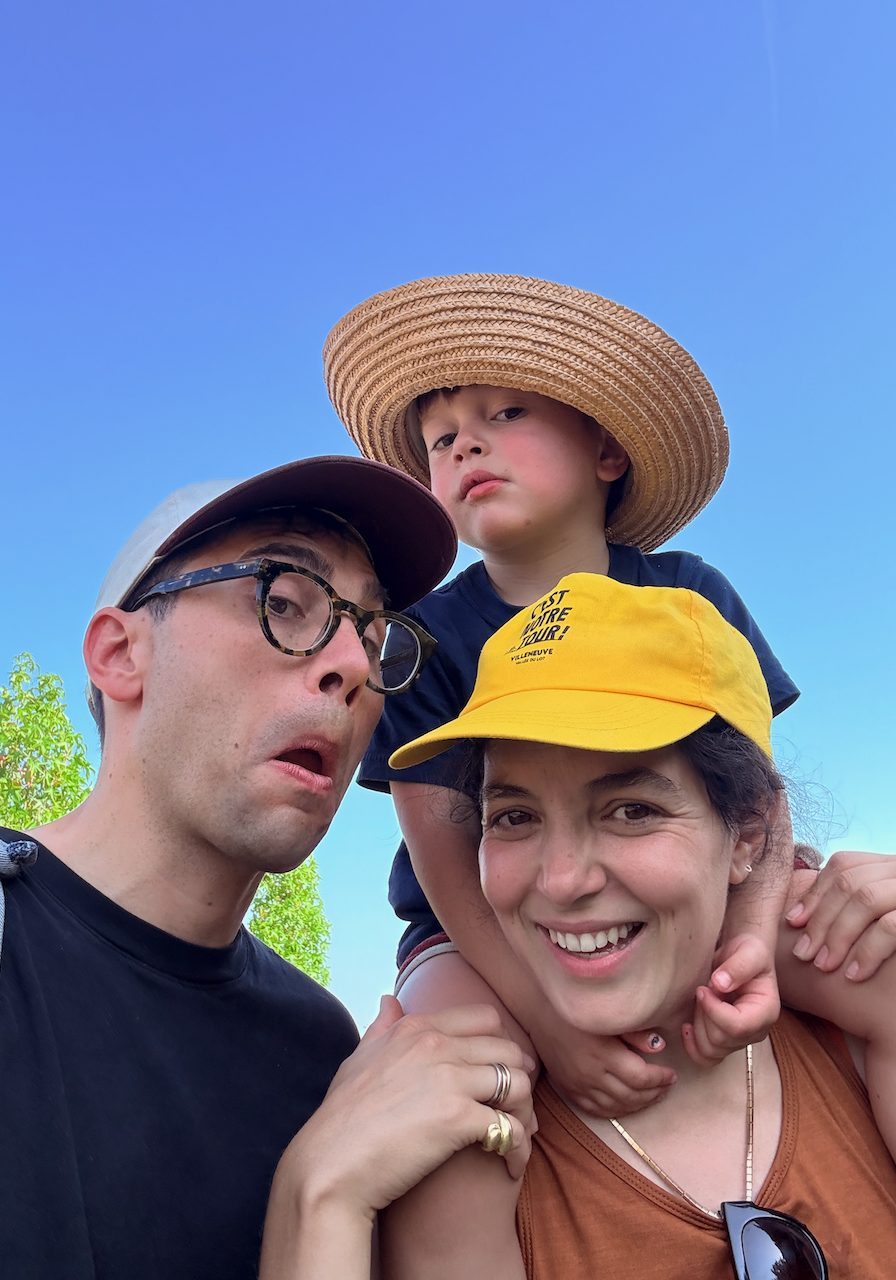
I have a new role now. I am a dad, a partner, a son and a friend who lives with chronic illness. And I am aware how painful this can be for others too. This awareness made me reconsider how I live my life and the choices that I make day to day.
Thinking about mortality makes you viscerally aware that we all have a finite number of encounters, and that any one of them could be the last. While this hurts, I have found that it also enriches the quality of my lived experience.
This richness is not joy or happiness. It is presence and awareness.
I meditate, I journal and I practise breathwork. I work on myself, research my condition, take part in clinical trials and spend a disproportionate amount of money on supplements and healing protocols.
Finding Presence
I have also started writing about this journey on Substack. Putting words to the experience has become another way of processing it all. It allows me to examine the emotional patterns that emerged after diagnosis and the ways in which illness reshapes the way we relate to time, control and the body.
While I remain painfully aware PSC is here to stay, I am thankful that for now things are stable.
While I cherish this and remain optimistic about my future, PSC has made me vigilant, and somewhat tentative in the way I approach spontaneity.
I have no physical symptoms of PSC or UC. I am living a healthy life. I am active and I enjoy what I do. Yet I find it hard to let go of the burden of it all. That is something I am still working on.
Why I Run
Running now sits at the centre of my life.
I used to play football as a child, and throughout my life I have returned to running several times. But after diagnosis, I really caught the bug.
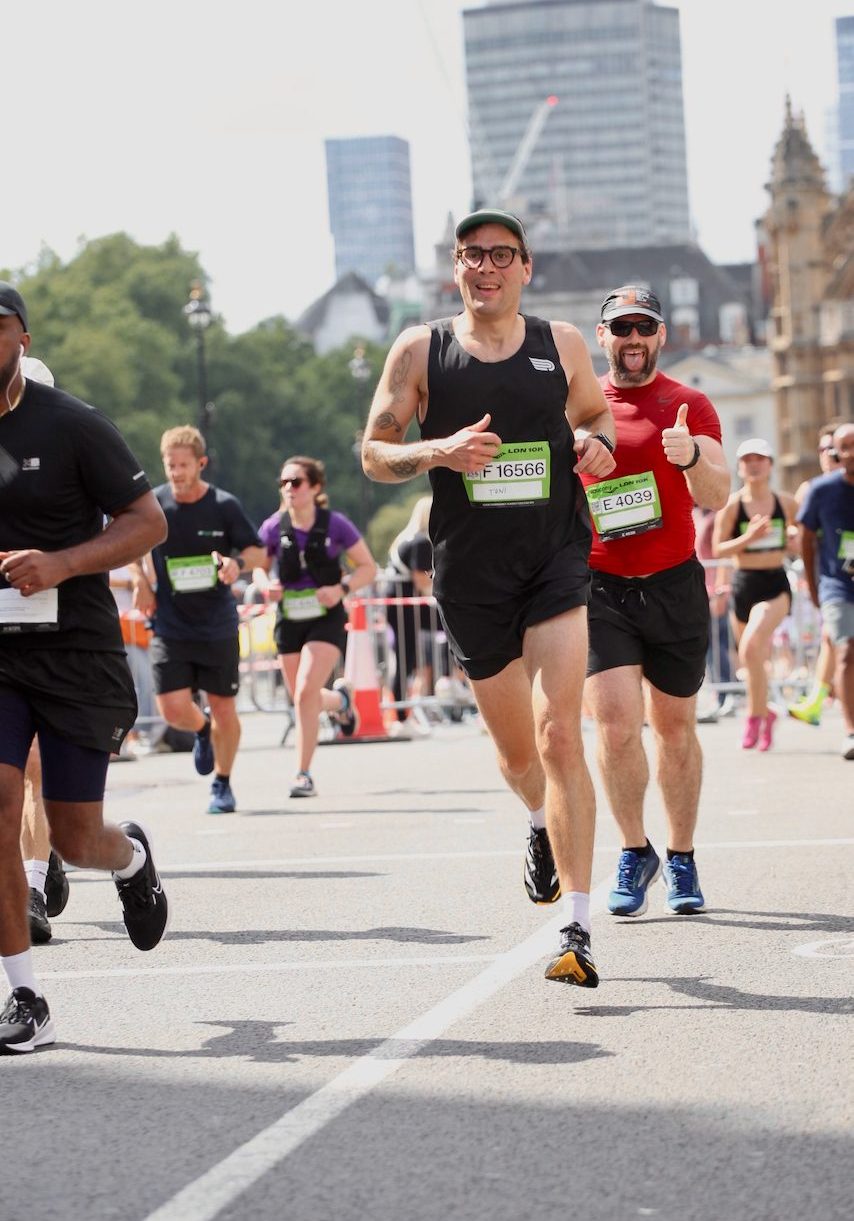
Running has become a way of focusing on the short term, chasing new distances and personal bests within a healthy window of eight to sixteen weeks.
I found this incredibly helpful, especially at the beginning when learning to live with my condition. It makes sense. When mortality taints your long-term future, one can find deep comfort, control and a sense of vitality in the short term through running.
In that sense PSC became an enabler for me. I do not feel like I have missed out on anything so far. If anything, my life feels richer now.
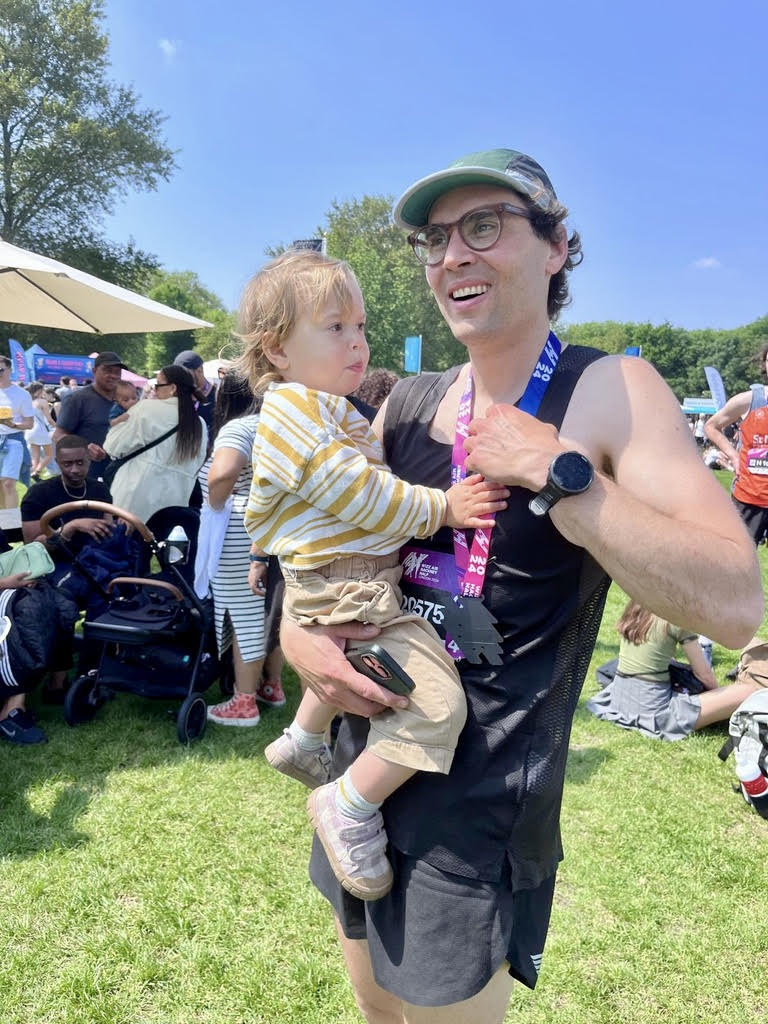
Running has also given me a chance to raise funds for PSC Support, and so far I have raised around £10,000. Hopefully, as I complete the London Marathon in April 2026 I will get a chance to double that amount.
Looking Forwad

PSC is a rare condition, and as such it does not attract much attention. PSC Support is the only UK charity dedicated to raising critical funds for research. It has been phenomenal to see the positive research results emerging in the past few years alone since my diagnosis.
My running does not end here this year. At the end of June I will run the Lavaredo Ultra Trail in Italy, and in September I will attempt to complete the Julian Alps Ultra Trail by UTMB, an 80km course starting in Slovenia. Both races I had to cancel last year after a long injury, which brings me to some final thoughts.
Some of us living with PSC appear normal on the outside. The outlook is healthy. We run, we work, we parent and we function. But the cost of chronic inflammatory illness, I have come to believe, often shows up in other areas of our lives.
In my case it has affected recovery and disturbed sleep. While I am impressed by my body’s ability to cope with running mileage and other stressors, I know things could be a lot better.
This hurts, and it requires practising acceptance again and again.
This internal work of accepting that I have been dealt a rough hand, and that there is nothing I can do to change it, is the hardest part of living with PSC.
It is invisible, and at times it can feel isolating.
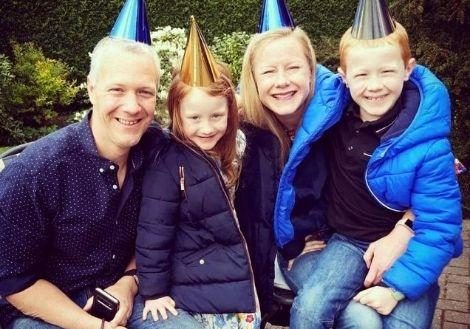
Thank you Antonio and his family for sharing their PSC story in advance of running London Marathon 2026.