Driving Global Change Through the Patient Voice
Driving Global Change Through the Patient Voice
Survey Results
The Burden of Itch in PSC
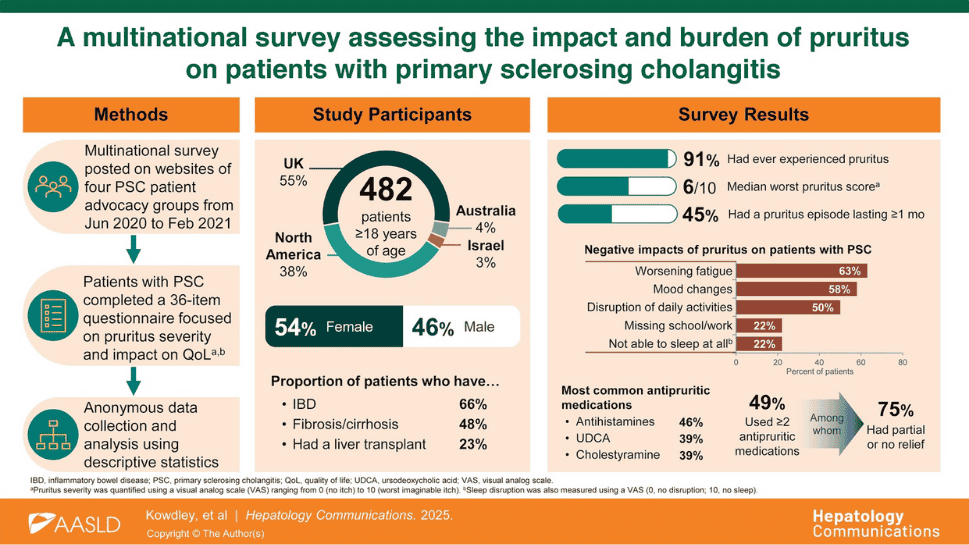
A major multinational survey, involving collaboration between PSC Support, Mirum Pharmaceuticals, PSC Partners Seeking a Cure, and other patient groups, has been published in Hepatology Communications. This research provides powerful new evidence on the burden of cholestatic pruritus (itch) in primary sclerosing cholangitis (PSC).
What is the impact of itch in PSC?
Cholestatic pruritus is a common and often debilitating symptom of PSC. The study confirms it has a major impact on quality of life, frequently interfering with mood, sleep, and daily responsibilities. In the UK, untreatable itch is officially recognised as a legitimate reason for a liver transplant.
How effective are current itch treatments?
The survey highlights a significant treatment gap. Half of the respondents had tried two or more medications for itch, yet 75% experienced only partial or no relief. This reinforces the urgent need for new, effective therapies and the validation of Patient-Reported Outcome Measures (PROMs) in clinical trials.
Why should patients talk about itch in clinic?
The results showed that while most clinicians were aware of the itch, nearly 40% did not proactively ask about it. If you itch, we encourage you to start the conversation during appointments to ensure symptom management is prioritised as part of your care plan.
How does this research help the PSC community?
By quantifying the lived experience of symptoms, we provide regulators with robust data to prioritise PSC in drug development. PSC Support is also working on a care 'blueprint' to ensure all hospitals provide the right care and symptom management, and timely specialist referrals.
Take home message
Talk to your PSC doctor about your itch if you have it. Discuss medication options. Do not suffer in silence.
Thank you
We would like to thank every member of the PSC community who took the time to share their experiences in this survey back in 2020.
Patients in the UK provided over half of the responses for this global survey, showing that the UK patient community is at the forefront of driving research forward. Your contribution is helping us move closer to a world where the symptoms of PSC are better understood and effectively treated. Thank you!